Right now, in the middle of August, the open-air tram is running every fifteen minutes through Seacrest Beach. A resident calls for pickup from a stop near their front door, and by the time they've walked to the curb, the tram is usually already there. Wristbands change color every week. The lagoon pool, all 12,000 square feet and 378,000 gallons of it, is full of the same rotating cast of families it sees every summer. This is the version of Seacrest Beach most people know.
It is not the only version. Come November, when the tram parks for the season, the neighborhood does not simply go quiet. It reverts to something that was here before the tram, the pool, and even most of the current homes existed. Understanding that shift is less about nostalgia and more about knowing which Seacrest Beach you're actually living in on any given week.
A Master Plan Built Around One Loop
Seacrest Beach II broke ground in 1996 under developer George Dana "Doodle" Harris. Walton County approved the original master plan that December, then signed off on five rounds of amendments before the layout residents recognize today was finalized in May 2001. The Lagoon Pool itself was already finished by then, completed in May 2000. The homeowners association didn't take control of the community from the developer until October 2004, and the walking trails and the 14-acre Greenway stayed in developer hands until 2007. The pool and its surrounding common areas weren't fully purchased from the developer until 2010.
Read that sequence in order and a pattern shows up: the pool went in years before residents or their own association had full say over the rest of the community. The neighborhood was built outward from a single amenity, and the tram exists to make sure that amenity stays reachable no matter how far back a lot sits from Highway 30A. That's one Seacrest Beach, the engineered one, and it works exactly as designed for eight months a year.
What the Tram Actually Connects
The Beach Tram runs March through October, with pickups guaranteed inside fifteen minutes from any stop in the neighborhood. It starts at 9 a.m. and makes its last pickup from the beach at 5:30 p.m., seven days a week during the season. Anyone eight or older needs a wristband to ride it, and those wristbands are recolored weekly, a small operational detail that says a lot about how tightly the system is run.
The tram doesn't just save people a walk. It erases the distance between an interior lot and the water for the eight months a year that Seacrest Beach is busiest, which means the neighborhood functions as though every home were beachfront.
The Lagoon Pool itself stays open year-round, from 9 a.m. to 9:45 p.m., heated only by the sun. That detail matters more in December than in August. Without the tram running and without solar heat doing much work on a chilly winter afternoon, the pool stops being the daily draw it is right now.
Peddlers Pavilion Runs on Tram Time
Peddlers Pavilion sits at the neighborhood's commercial center, right along 30A, and in tram season it fills up the way you'd expect a drop-off point to fill up. LaCo, the Latin-inspired restaurant with a coastal twist, runs happy hour from 3 to 5 p.m. every day of the week. SeaCrust Pizza serves hand-tossed pizza out of the Pavilion with more than two dozen toppings to choose from. Peddler's Pub keeps live music going for anyone who wandered over after a tram drop. Along the Timpoochee Trail, Beach and Brew has built a loyal following among cyclists and walkers passing through, currently holding a 4.8 rating on Google for its rotating selection of Florida microbrews.
None of that closes when the tram stops. What changes is who's showing up. A Pavilion crowd delivered by tram looks different from a Pavilion crowd that arrived by bike along the Timpoochee Trail or on foot from a few blocks over. The businesses stay open. The rhythm of a Tuesday afternoon there in January doesn't resemble the rhythm of a Tuesday afternoon there in July, even if the menu hasn't changed at all.
The Path the Tram Was Built to Replace
Long before the tram, and still running alongside it, Seacrest Beach has a brick-paved walkway called the Palm Tree Path that winds from the interior of the neighborhood toward the Gulf. It connects into roughly 1.3 miles of unmarked trails threaded through the community's 14-acre Greenway, the same Greenway the developer handed over to the homeowners association back in 2007.
When the tram is running, the Palm Tree Path is one option among several for getting to the beach. When the tram stops, it becomes the option. Nobody has to plan a car trip or wait on a pickup window to get to the water. That's a different kind of neighborhood than the one built around a fifteen-minute tram schedule, and it's the one that's actually been there the entire time, just underused for a few months a year.
The Other Half of the Map
Seacrest Beach has always had a second geography that the tram route never touches. South of 30A and west of the main subdivision sits what locals call Old Seacrest, a stretch of traditional beach cottages, smaller condo buildings, and a handful of Gulf-front properties that predate the master-planned development entirely. It's quieter by design, not by season, and it was never meant to connect to the Lagoon Pool loop in the first place.
Two spots anchor that other half. Crabby Steve's Gulf Front Bar & Grill sits inside High Pointe Resort, off the tram route and often described by regulars as the neighborhood's secret bar, which is a strange thing to call a restaurant sitting right on the Gulf until you remember it's tucked inside a private resort with no shuttle stop nearby. It's one of the only true tiki bars anywhere along the 30A corridor, and it stays exactly as reachable in December as it is in July, because reaching it never depended on a tram to begin with.
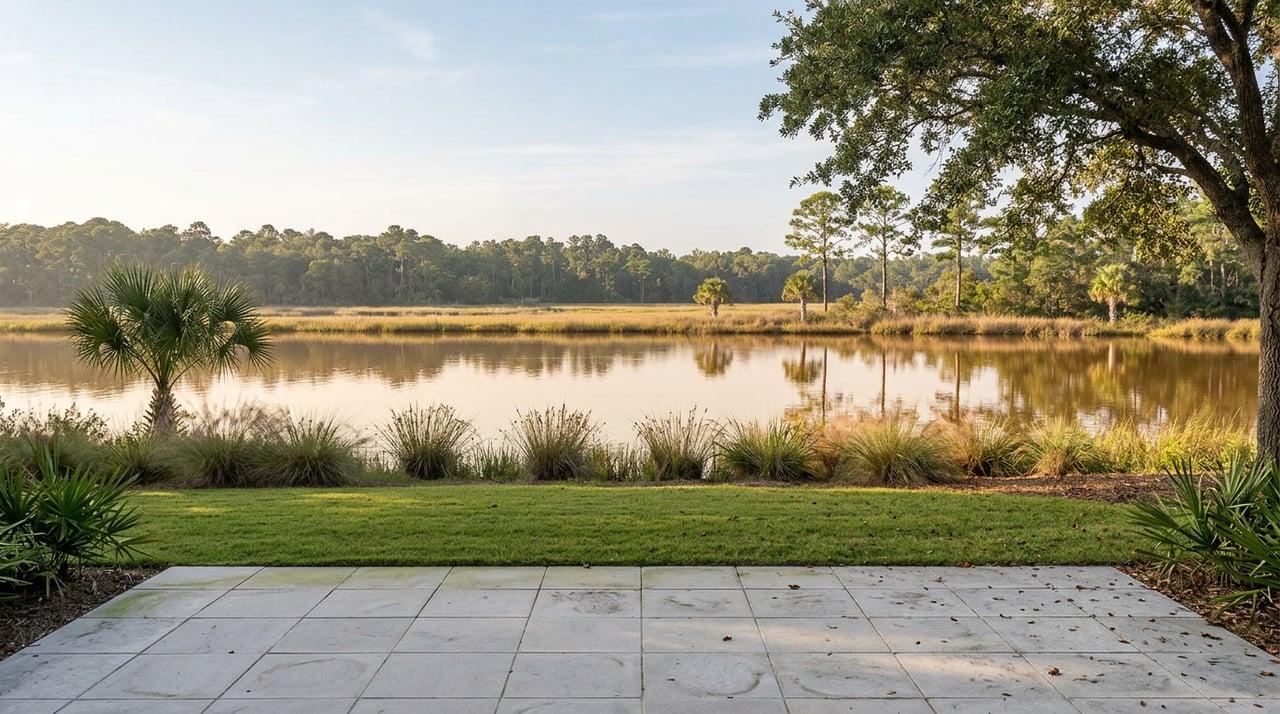
Camp Creek Lake sits on the western edge of the neighborhood, one of South Walton's coastal dune lakes, and it offers the kind of quiet the Lagoon Pool was never designed for. Birdwatching, paddleboarding, watching the sun go down over brackish water. Homes along its edge back right up to the shoreline, and the whole scene feels a world away from the amphitheater lawn where concerts, movies, and bocce games happen closer to the Pavilion.
Two Clocks, One Zip Code
Seacrest Beach isn't one neighborhood that gets quieter in the off-season. It's two neighborhoods sharing a homeowners association, one engineered around a pool and a tram schedule, the other older and quieter and never built to need either. For eight months a year, the tram makes the first version dominant enough that most people forget the second one exists. For the other four, Old Seacrest, Camp Creek Lake, and Crabby Steve's are simply what's left standing, doing exactly what they've always done.
Knowing which version of the neighborhood you're in on any given week changes how the whole place feels, whether that means timing a walk to the beach around the tram's last pickup or knowing Crabby Steve's will be nearly empty on a cool January evening when it would have a wait in July.
If this stretch of 30A, in either of its moods, has you thinking about a home here or nearby, the team at Lynne Andrews Luxury Collective knows both versions of these neighborhoods well enough to help you find the one that actually fits how you want to live. Schedule a personalized consultation whenever you're ready to talk specifics.