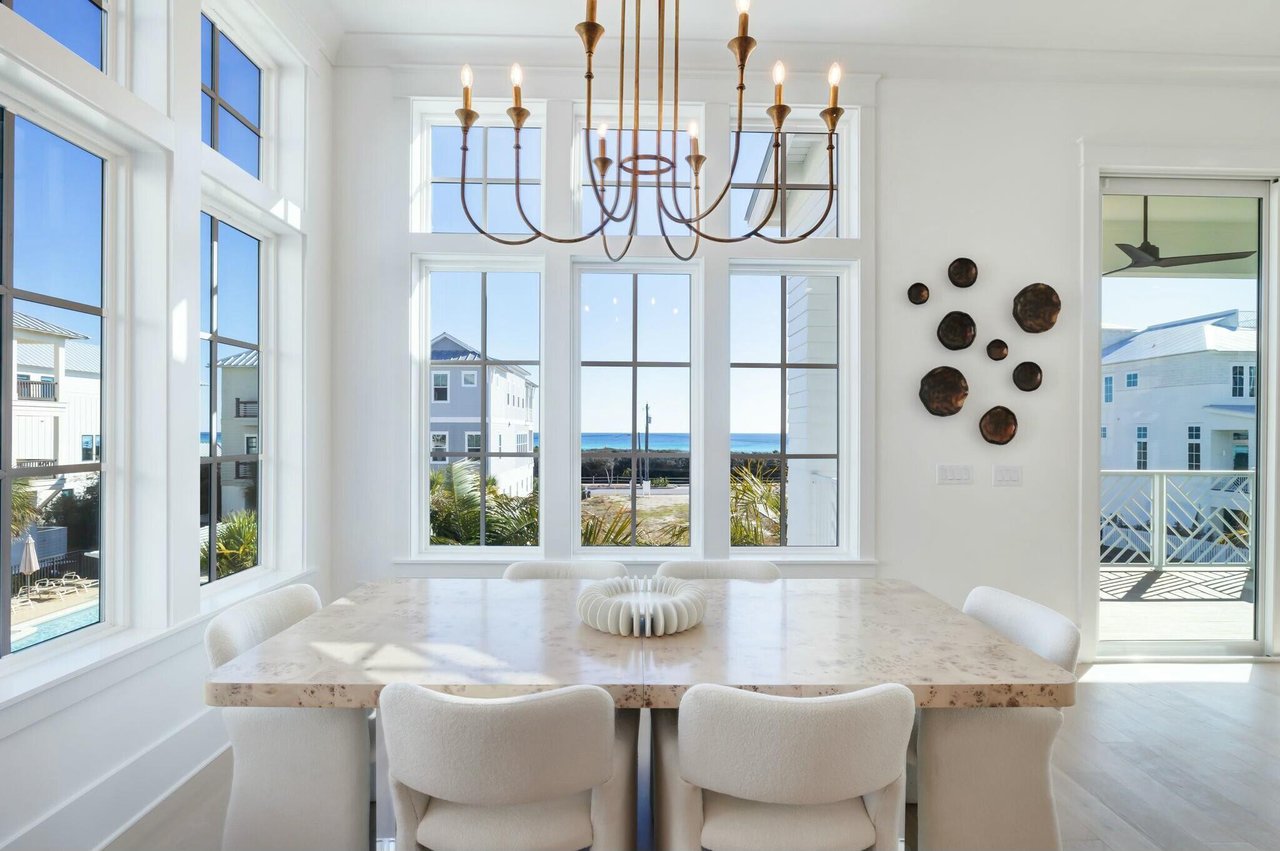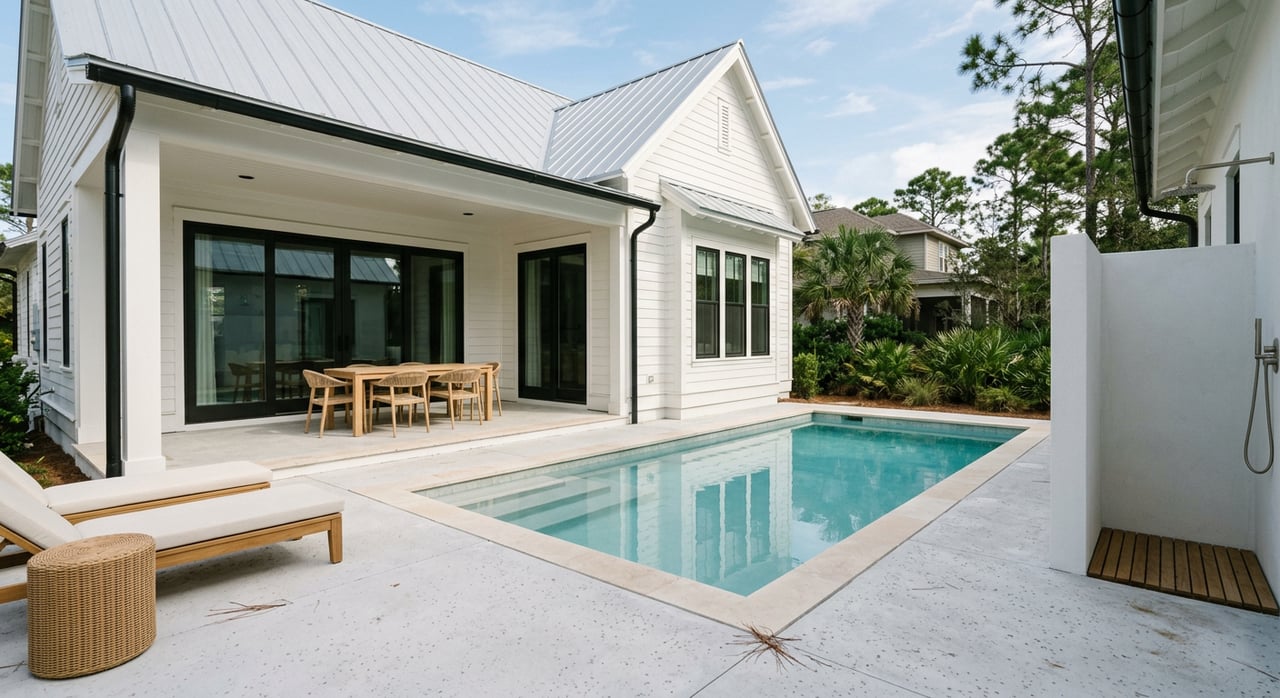
What really moves the needle on price and rental returns in WaterColor? It is not just square footage or finishes. It is the way the Beach Club, pools, trails, and Town Center make every day easier and more enjoyable for guests and owners. In this guide, you will see how WaterColor’s amenities show up in home values and short‑term rental income, what fees and rules you should plan for, and how to build a clean pro forma. Let’s dive in.
WaterColor amenities at a glance
Beach Club and pools
WaterColor centers daily life around a private Beach Club with three pools and direct beach access. Camp WaterColor adds a lazy river and family‑friendly pool complex, and there are roughly ten community pools across the neighborhood. Tennis and pickleball courts, a Boathouse on Western Lake, and a Bike Barn round out the activity mix. You can review the full amenity list and access details in the community’s official guide at the HOA website’s visitor materials. WaterColor’s Visitor Guide outlines these amenities.
Trails, parks, and Town Center
Beyond the beach, you get parks and trails, a lakefront lifestyle at the Lakehouse and Boathouse, an outdoor amphitheater, and programmed community events. The Town Center clusters restaurants and retail so you can walk for coffee, dinner, or last‑minute beach gear. These features do more than entertain. They cut friction for daily life, which is exactly what buyers and rental guests pay for.
Why amenities lift home values
Coastal premiums are real
Academic research shows that coastal buyers pay more for better beach access and beach quality. A leading hedonic study by Landry, Turner, and Allen finds that beach characteristics, not just distance, are capitalized into price. In plain terms, wider beaches and easier shoreline access are associated with higher property values. You can read the summary of these findings here: hedonic property prices and coastal beach width.
Green space and walkability matter
Meta‑analyses also show consistent price premiums near parks, greenways, and walkable town centers. The uplift varies by market and study, but many results fall in the low‑single to high‑teens percentage range. WaterColor’s trails and Town Center fit this pattern. For a clear review, see the MDPI summary of green amenity price effects.
Local price context
Market aggregators place WaterColor among the highest‑priced submarkets on 30A. One recent snapshot shows a 12‑month median sale price near $3.06M, reflecting how buyers value the combined package of beach access and resort‑style amenities. For context, see the WaterColor neighborhood market page. Always confirm parcel‑level pricing with current MLS data when you are comparing specific homes.
How the premium shows up
Buyers pay for:
- Immediate or managed beach access through the Beach Club.
- On‑site pools and child‑focused programming that simplify group trips.
- A walkable Town Center with dining and retail.
- Trails and lake activities that add variety beyond the beach.
When these features are bundled, they boost both perceived lifestyle value and willingness to pay.
What owners pay for access
WaterColor’s HOA lists a Base Assessment of $1,200, itemized and billed quarterly. Sub‑associations, including Town Center and Beachside condos, may add separate assessments. The St. Joe Company operates some Town Center and lake or beach businesses, and homeowners may see discounts for those services, but these are not part of the HOA assessment. Review the official HOA welcome brochure for current line items and billing practices: WaterColor New Homeowner Welcome Brochure.
Wristbands and access
Amenity access is controlled through wristbands. Guests age 5 and older need wristbands to use pools and other HOA‑managed facilities. This structure keeps amenities orderly in peak weeks and helps protect the experience owners expect. You can review wristband rules and operational notes in the WaterColor Visitor Guide.
Renting in WaterColor: rules and fees
STR compliance and nightly guest fee
If you plan to rent, you will complete an Annual Owner Certification that sets your property’s Maximum Certified Number of Guests. You will also register in the Short‑Term Rental Portal and submit wristband requests for rental guests. The HOA charges a per‑night Guest Fee equal to the Maximum Certified Guests multiplied by $9.00 per guest per night. Rental listings may not advertise more than the certified maximum. These details are spelled out in the HOA welcome brochure.
Owners and managers handle wristband logistics for each stay. Many pass the per‑night Guest Fee through to the reservation in a transparent line item. However you structure it, budget this fee into your operating model.
Guest experience and operations
Operational rules influence reviews and repeat bookings. Wristbands are required for amenity access. Some amenity lots use paid parking. There are low‑speed vehicle registration rules and controlled cabana or Beach Club reservations. Build check‑in instructions and manager workflows around these controls so guests arrive confident and informed. You will find a helpful overview in the Visitor Guide.
How amenities drive STR revenue
Seasonality on 30A
Demand on 30A runs in strong waves. Peak periods cluster around late spring and summer, plus spring‑break windows and select shoulder weekends in May and September or October. Amenity‑rich communities like WaterColor typically convert this family‑oriented demand into higher Average Daily Rates and strong occupancy in peak months. Industry analyses often show July as a revenue high point and January as a low point. For a broad market overview, see this review of Florida STR seasonality and yield patterns from an analytics firm: best short‑term rental markets overview.
Benchmarks and variability
Neighboring premium towns also show strong numbers. For example, Rosemary Beach reports robust ADRs and approximately 67 percent occupancy in one Airbtics 12‑month window, although exact figures vary by platform and how each defines the market. Use third‑party tools for directional benchmarks, then ground your pro forma in property‑level P&Ls and quotes from local managers. You can explore a nearby benchmark here: Airbtics’ Rosemary Beach market page.
Taxes and net income
In South Walton, short‑term rentals face multiple taxes that affect net revenue. The Tourist Development Tax is 5% south of the Choctawhatchee Bay. Combined with Florida state sales tax and local surtax, the typical tax load on short‑term rental receipts is about 12%. Owners and managers are responsible for proper collection and remittance. Walton County provides a clear overview in its guidance: How much tax should I collect.
Which amenities move bookings
Within WaterColor, certain features tend to lift both ADR and conversion:
- Beach Club access with multiple pools and towel service.
- Camp WaterColor’s kid‑friendly programming and lazy river.
- A walkable Town Center that reduces car dependence.
- Lake access for paddle activities at the Boathouse.
These make larger group trips simpler to plan and enjoy, which shows up in stronger peak‑season performance and better reviews.
Build your pro forma
Use a simple, transparent framework when you compare homes or communities.
A) Confirm amenity access
- Verify that Beach Club access for your home is included via HOA wristbands. Some 30A communities require paid club memberships. In WaterColor, wristbands manage access for owners and registered guests.
B) Itemize HOA and recurring costs
- Start with the Base Assessment at $1,200 billed quarterly from the HOA brochure. Add any sub‑association dues, bulk cable or internet charges, and a prudent allowance for potential special assessments. Ask for the HOA’s current budget and most recent reserve study.
C) Model STR costs and taxes
- Include the HOA nightly Guest Fee of $9.00 times the Maximum Certified Guests. Add management fees, cleanings and linens, maintenance, insurance, utilities, and admin. Do not forget the approximate 12% tax load on STR receipts in South Walton.
D) Build three revenue scenarios
- Conservative: ADR minus 15 percent, softer shoulder occupancy, higher turnover costs.
- Baseline: Market ADR and typical occupancy for your micro‑market, anchored by third‑party tools and local manager quotes.
- Upside: Premium ADR for gulf‑front or Beach Club‑adjacent homes with strong peak‑season conversion. Stress test occupancy because revenue is concentrated in peak months.
E) Sanity‑check the amenity premium
- Compare against nearby listings with similar size and finish. If a home is 10 to 20 percent above close comparables, identify the amenity driver that justifies it: direct Beach Club adjacency, shorter walk to the shoreline, exceptional lake frontage, or superior Town Center access. Academic work supports premiums for beach quality and green amenities, but magnitudes are local and property specific.
F) Gather due diligence documents
- Seller’s 12 to 24 months of STR P&Ls with monthly gross revenue, occupancy by platform, and ADRs.
- HOA budget, reserve study, and board minutes from the last 12 to 24 months.
- The property’s Maximum Certified Number of Guests and any sub‑association rules. Confirm short‑term rental registration status.
Compare with other 30A communities
- WaterColor: Resort‑style setting with included Beach Club access via wristbands, multiple pools, child‑focused programming, trails, and a walkable Town Center. HOA guest fees and access controls shape the STR model and guest flow.
- Rosemary Beach: A compact, highly walkable town plan supports strong seasonal demand and ADRs. Use local STR data and property‑level P&Ls for direct comparisons.
- Alys Beach: Tight architectural controls and private club‑style amenities attract a premium buyer profile. Carrying costs and membership structures can differ from WaterColor.
- Watersound (various enclaves): Golf and club components may require separate initiation and dues for members, which can shift annual holding costs and buyer expectations.
The bottom line
If you are buying for lifestyle, WaterColor’s Beach Club, pools, trails, and Town Center deliver tangible daily benefits. If you are investing, those same features support pricing power in peak months and help sustain bookings in the shoulders when paired with smart marketing. Build your model with real costs, document the rules that guide guest access, and use both market benchmarks and actual P&Ls to set expectations.
When you are ready to compare homes or shape a rental strategy, connect with the team that blends hospitality know‑how with marketing excellence. Schedule a conversation with the Lynne Andrews Luxury Collective to review your goals and build a clear plan.
FAQs
How do WaterColor amenities affect resale value?
- Studies show buyers pay more for better beach access and nearby green space, and WaterColor’s Beach Club, pools, trails, and Town Center concentrate those benefits in one place.
What short‑term rental taxes apply in South Walton?
- Most short‑term rentals face about 12 percent total on rent collected, which includes Florida sales tax, local surtax, and the 5 percent Tourist Development Tax south of the bay.
How do guest wristbands work for WaterColor rentals?
- Owners certify a maximum guest count, register rentals, and request wristbands for guests age 5 and older; the HOA charges a nightly guest fee based on the certified maximum.
What HOA costs should I plan for as an owner in WaterColor?
- Budget the Base Assessment of $1,200 billed quarterly, any sub‑association dues, bulk services, and a prudent reserve for potential special assessments based on HOA documents.
Which amenities most improve STR performance in WaterColor?
- Direct Beach Club access, multiple pool options, Camp WaterColor’s kid‑friendly features, walkable dining and retail, and lake activities often lift ADRs and conversion.