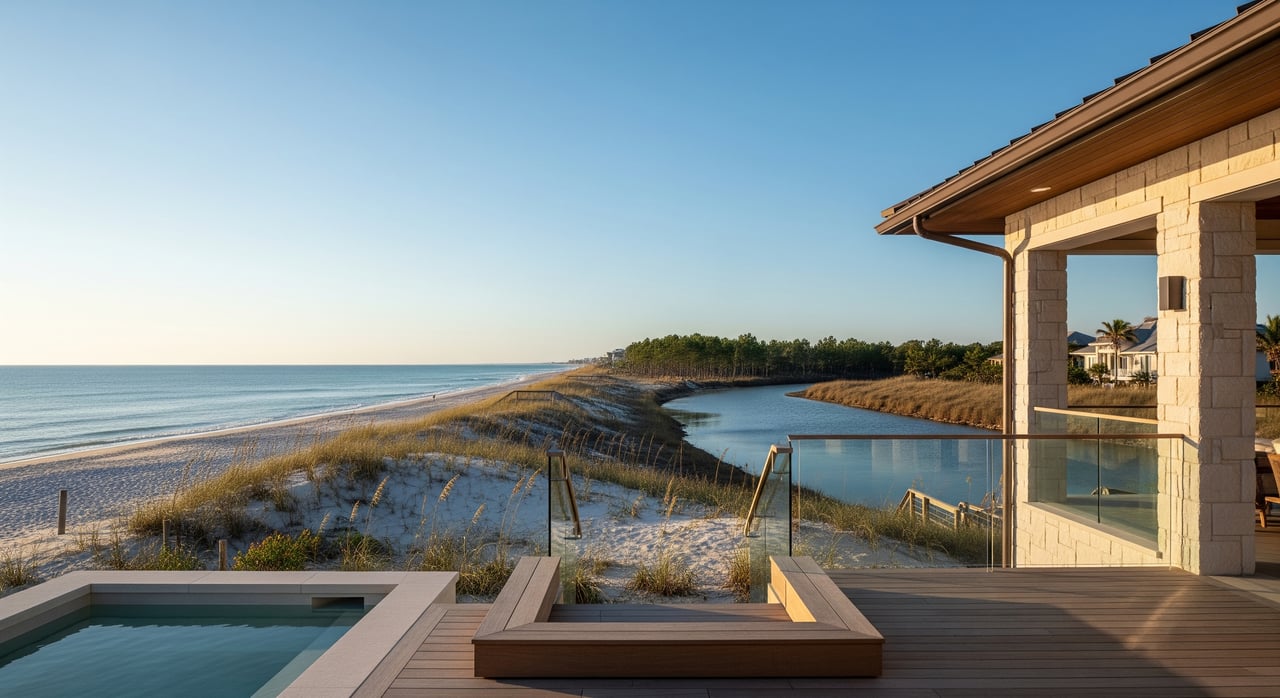
Should you wake to waves at your doorstep or sip coffee from a balcony with a sweeping shoreline view? If you are deciding between gulf-front and gulf-view in Inlet Beach, you are not alone. Each option delivers a different mix of cost, rental potential, maintenance, risk, and long-term value. In this guide, you will learn the key tradeoffs, a clear due diligence checklist, and a simple way to align your choice with your lifestyle and investment goals. Let’s dive in.
Gulf-front vs gulf-view at a glance
- Gulf-front: highest convenience and unobstructed views, direct or deeded beach access, and strong peak-season rental appeal. Expect a purchase price premium, higher insurance and maintenance, and more exposure to storms and public activity near access points.
- Gulf-view: lower entry price with a beach lifestyle feel, good privacy, and solid rental appeal in shoulder seasons if priced and marketed well. Expect to confirm walkability and access details, and plan for comparatively lower ongoing costs.
Price and rental potential
Gulf-front properties typically command a meaningful premium because they deliver absolute beach access and the best views. That premium often carries into higher nightly rates in peak demand weeks, which can lift gross rental revenue when the calendar is full. For many buyers, those weeks are where the gulf-front advantage shows up most clearly.
Gulf-view properties usually cost less to acquire and can produce competitive returns when marketed to longer stays or value-focused travelers. They can perform well in spring and fall shoulder seasons with the right pricing and guest targeting. If you are seeking a lower basis with strong lifestyle benefits, gulf-view often offers better value.
Who rents what, and when
- Peak demand: families and multi-family groups prioritize direct access, which benefits gulf-front nightly rates in spring break and summer holidays.
- Shoulder seasons: couples and retirees seek quieter stays and value, giving well-presented gulf-view homes a strong lane.
Access, privacy, and day-to-day use
Direct access is the gulf-front hallmark. You and your guests step from deck to dune walkover in moments, which is a high amenity for beach days and multi-generational groups. Near public access points, you may experience more foot traffic, parking congestion, and noise during peak weeks.
Gulf-view homes gain privacy from being set back from the shoreline and often benefit from natural vegetative buffers. The key is confirming how you reach the sand. Verify the walking route, the presence of a private boardwalk, or the location of public access points, and whether you must cross any roads.
Maintenance and structure
Coastal exposure drives ongoing costs, especially right on the water. Gulf-front exteriors, decks, railings, and HVAC systems face more salt spray, wind, sand, and UV. Expect more frequent upkeep and professional maintenance compared with homes further inland.
Structural choices matter. Gulf-front houses commonly use pilings or elevated foundations to meet code and reduce flood exposure. These designs have different inspection and repair profiles than slab-on-grade. If you are comparing two homes, weigh long-term reserves for corrosion, fasteners, and specialized coastal materials.
Insurance, lending, and carrying costs
Proximity to the shoreline often places gulf-front parcels in higher risk FEMA flood zones like VE or V. Flood insurance and windstorm coverage can be more expensive, with higher deductibles and stricter mitigation requirements. Premiums and exclusions vary by carrier, so obtain quotes early and compare both NFIP and private flood market options.
Lenders may apply different underwriting standards for higher risk zones and elevated structures. Interest rate offers can be influenced indirectly by required insurance and policy terms. Always budget for realistic carrying costs that include flood and wind coverage, not just principal, interest, taxes, and HOA.
Short-term rental rules and taxes
Short-term rental performance depends not only on the property but also on local regulation. In the broader 30A market, licensing, occupancy limits, and transient rental taxes are administered by county and municipal authorities. Inlet Beach sits near county boundaries, so confirm the exact jurisdiction for any parcel you are evaluating.
Rules can include registration, safety compliance, parking, occupancy caps, and remittance of tourist development taxes. HOA covenants may also limit or shape rental activity. Before you underwrite revenue, make sure permitting and policy details support your plan.
Environmental and safety factors
Storm surge, flood risk, and coastal weather are part of coastal ownership. Review FEMA flood maps and elevation data for each parcel, and consider how storm exposure might affect downtime and repair costs. Ask for elevation certificates, any V-zone certifications, and a record of mitigation features such as flood vents or engineered foundations.
Coastal erosion and dune protection influence long-term value. Beach width, dune stability, and any beach nourishment or restoration programs can affect how the shoreline changes over time. Deeded access, dune walkover condition, and any recorded easements or public access rights are important to review.
Newer or renovated structures that meet stricter coastal codes can offer resilience benefits. Elevated construction, wind load engineering, and upgraded materials may reduce risk, though they add to upfront cost.
Resale and exit strategy
Gulf-front supply is finite, supported by strict coastal zoning and limited buildable shoreline. That scarcity underpins premium pricing and helps sustain demand among buyers who want the very best access. In storm years or when insurance markets shift, price volatility can rise and the buyer pool narrows due to affordability.
Gulf-view homes can appeal to a wider range of buyers who prioritize privacy, lower carrying costs, and value. While appreciation may be steadier rather than spiking, resale liquidity can be strong thanks to a broader audience of second-home users and long-term occupants. Your expected holding period matters, since longer timelines can smooth episodic market swings.
Due diligence checklist
Use this shortlist to compare specific properties with confidence:
Property and site
- Confirm county or municipal jurisdiction and zoning, including short-term rental permitting.
- Identify FEMA flood zone and Base Flood Elevation, and request an elevation certificate if available.
- Verify shoreline status, deeded beach access, public access proximity, and any easements.
- Review topographic surveys, foundation type, recent major repairs, and condition reports.
Insurance and finance
- Obtain flood and windstorm quotes from both NFIP and private markets, including deductibles.
- Ask lenders about underwriting for coastal risk zones, required mitigations, and appraisal approach.
Rentals and regulations
- Request documented rental histories, occupancy by month, ADR, and major expenses.
- Confirm STR permits, HOA rules, occupancy and parking limits, and required tax remittance.
Structural and environmental
- Order a coastal-focused inspection that covers drainage, corrosion, structural connections, pilings, HVAC, and moisture.
- Research shoreline stabilization, nourishment projects, and any municipal work that could affect access or beach use.
Market comps and valuation
- Pull closed sales and active comps for both gulf-front and gulf-view within Inlet Beach and adjacent 30A communities.
- Analyze gross rental multipliers and cap rates, then stress test with lower occupancy or higher insurance.
Professional advisors
- Engage a local real estate broker with gulf-front experience, an insurance broker familiar with coastal Florida, a property manager for rental comps, and a real estate attorney for title and access verification. A coastal engineer can advise on erosion history and future nourishment plans.
Choose with a simple framework
- Choose gulf-front if you value the highest convenience, true walk-out access, and peak-season rate power, and you are prepared for higher insurance, maintenance, and regulatory diligence. Your risk tolerance and capital reserves should be stronger.
- Choose gulf-view if you prefer a lower acquisition cost, more privacy, and solid rental potential in shoulder seasons with good marketing. You want the lifestyle and the view with a more balanced cost profile.
- For investors balancing yield and risk, model both options. Compare net operating income under conservative occupancy, include realistic insurance and maintenance, and factor your holding period. Let actual rental histories and closed comps guide your decision.
Practical next steps
For any listing that catches your eye, secure recent closed comparable sales, full rental statements, flood zone and elevation details, and current insurance quotes before you write an offer. Confirm jurisdiction and short-term rental status at the parcel level. Build two pro formas, one conservative and one optimistic, that reflect seasonality and true carrying costs.
If you want a concierge partner who understands both the lifestyle story and the income story, you are in the right place. The Lynne Andrews Luxury Collective blends marketing excellence with practical vacation-rental expertise so you can buy with clarity and confidence. Schedule a Personalized Consultation.
FAQs
What is the main difference between gulf-front and gulf-view in Inlet Beach?
- Gulf-front offers direct beach access and unobstructed views with a price and maintenance premium, while gulf-view trades direct access for lower entry cost, more privacy, and strong value.
Do gulf-front homes always earn more rental income?
- Not always, since higher peak-season rates can be offset by higher insurance and maintenance; well-priced gulf-view homes can compete on net returns, especially in shoulder seasons.
How do flood zones affect my costs on 30A?
- Properties in VE or V zones often require higher flood and wind coverage with stricter mitigation, so premiums and deductibles should be included in your underwriting.
What short-term rental rules apply in Inlet Beach?
- Rules are set by county and municipality and can include permits, occupancy limits, parking, and tax remittance; confirm the exact jurisdiction and HOA covenants for each parcel.
What inspections should I order for a coastal property?
- Commission a coastal-focused home inspection that covers structural connections, pilings and scouring, corrosion, HVAC condition, drainage, and moisture or mold concerns.
How should I compare two properties as an investor?
- Request closed comps and rental histories, model conservative and optimistic NOI, include realistic insurance and maintenance, and stress test for lower occupancy or higher premiums.