Wondering which part of WaterColor will actually feel right once you are living there, not just touring it? That is one of the most important questions you can ask, because WaterColor is not one uniform neighborhood. Its districts shape how you move through the community, how close you are to core amenities, and what your day-to-day experience may look like. If you are comparing homes in WaterColor, this guide will help you match the right area to your lifestyle. Let’s dive in.
Why WaterColor Districts Matter
WaterColor is a roughly 500-acre master-planned community in Santa Rosa Beach in Walton County along Scenic Highway 30A. Community materials describe it as a beachfront resort community with Western Lake, a private beach, trails, pools, parks, tennis, Camp WaterColor, and a walkable layout designed to encourage biking and walking.
That broad description is helpful, but it does not tell the whole story. WaterColor is organized into multiple named districts and sub-neighborhoods, and those pockets do not live the same way. Some areas place you closer to the Beach Club and Town Center, while others lean more into trails, lake access, or a more internally buffered setting.
The community map is best viewed as a lifestyle guide, not a measuring tool. It is illustrative and not to scale, so it makes more sense to think in terms of experience, access, and setting rather than exact walking times.
The Four Main Lifestyle Zones
When buyers compare WaterColor, they usually narrow their search into four broad zones. These larger areas can help you quickly understand how each section may fit your goals.
Beach Club and Town Center Side
If your ideal 30A lifestyle means stepping out the door and being close to the social and amenity core, the west side of WaterColor is often the strongest fit. Official community materials place the Beach Club, WaterColor Inn, Town Center, Cerulean Park, and central gathering areas in the western and central-west portion of the community.
This is the part of WaterColor that often feels most aligned with a "park the car and forget it" lifestyle. You are positioned near dining, retail, gathering spaces, and major amenities, with community design that emphasizes walking, biking, and trolley use.
For many buyers, this area offers the most direct connection to the classic WaterColor experience. It can be especially appealing if you want easy access to the Beach Club and Town Center to be a regular part of your routine.
Camp District
The Camp District, also referred to as Phase 2 in HOA materials, sits east of Phase 1 in the central part of the community. It includes residences, a community area and pool, and a bicycle and pedestrian path running along its west side near streamside wetlands that flow toward Western Lake.
This zone tends to stand out for buyers who want strong access to recreation without being on the beachfront edge. Camp WaterColor is the community’s family-focused recreation hub, with zero-entry water, slide features, a lazy river, a playground, a basketball court, and The Canteen.
If your picture of ownership includes frequent pool days, easy activity access, and a central location within the community, the Camp District often rises to the top. It is one of the clearest choices for buyers who prioritize amenity-driven daily living.
Lake District
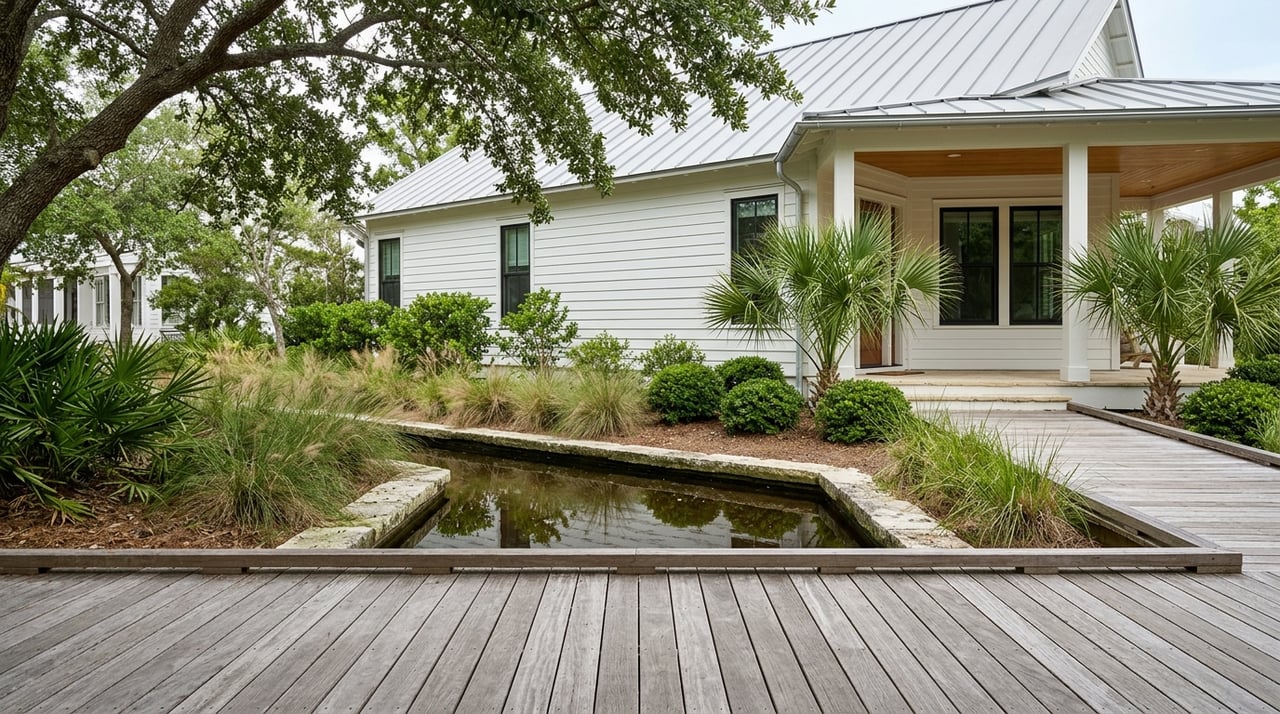
The Lake District, identified as Phase 3 in HOA materials, is a large residential area in the northwest portion of WaterColor. It is shaped by Western Lake, trail corridors, boardwalks, sandhill habitat, and adjacency to Grayton Beach State Park along the north edge.
This area has the strongest nature-and-trails identity in the community. Official descriptions highlight boardwalk features, trail segments, remnant sandhill along the northeast side of Western Lake, and lake views toward Grayton Beach State Park.
If you are drawn to scenery, outdoor movement, and a setting defined more by preserved land and lake character than by the resort core, the Lake District may be the best fit. It still connects to the broader WaterColor amenity system, but its appeal is clearly tied to landscape and setting.
Crossings and Eastern WaterColor
The Crossings District, or Phase 4, is located east of County Highway 395. HOA materials describe this section as land that historically included wetter natural features such as mesic and wet pine flatwoods, seepy swamps, preserved central natural areas, and stormwater ponds.
In lifestyle terms, this area often reads as more separated from the beachfront core. It can feel more internal and less centered on the Town Center and Beach Club side of community life.
That may be exactly what some buyers want. If you prefer a setting that feels a bit more removed from the main resort activity and are comfortable using the trolley, walking paths, or a car for some amenity trips, the eastern side deserves a close look.
Best District for Walkability
If walkability is your top priority, start with the west side. Community materials place Town Center, the Beach Club, retail and dining areas, and several of the best-known shared spaces in this part of WaterColor.
This is where many buyers find the easiest day-to-day access to the amenity core. It is also where parking management becomes more relevant, which reinforces just how central and active this part of the community is.
Sub-neighborhood names like Park Row and Beach Lane are worth watching if you want to be in one of the most compact and amenity-forward pockets. HOA parking guidance suggests these areas may require more specialized parking solutions, which is a useful clue that they sit within some of WaterColor’s tightest, most walkable settings.
Best District for Recreation-Focused Living
If your ideal home base centers on active amenity use, the Camp District usually stands out first. Camp WaterColor is purpose-built around recreation, with water features, a playground, sports space, and casual on-site dining.
That makes this section especially compelling for buyers who expect the community’s activity offerings to shape how they spend time at home. Instead of focusing first on beach proximity, you may find more value in direct access to one of WaterColor’s most established recreation hubs.
For second-home owners and vacation-rental-minded buyers, this type of amenity access can also be important when thinking about guest appeal. A home’s district can influence how easily owners and guests plug into the lifestyle WaterColor is known for.
Best District for Nature and Trails
If you want your surroundings to feel defined by landscape, the Lake District is the clearest match. Western Lake is central to the experience here, and the official descriptions emphasize trails, boardwalks, sandhill features, and preserved land nearby.
This part of WaterColor can appeal to buyers who want a more scenic rhythm to daily life. You may be thinking less about stepping directly into the Town Center and more about being close to trail corridors and lake-oriented views.
That distinction matters. In WaterColor, "best" depends on how you want to spend your time, and the Lake District serves a different kind of buyer than the amenity-first west side.
Best District for More Separation
If your goal is to have a little more distance from the main resort core, the Crossings and eastern pockets may be worth prioritizing. HOA materials place these areas east of Highway 395 and describe them as shaped by preserved natural areas and wetter land patterns.
Compared with the west side, this section may feel less compressed around major gathering zones. The tradeoff is that beach and Town Center access are generally less immediate, so your daily movement through the community may involve more planning.
For some buyers, that tradeoff makes perfect sense. A more internally buffered setting can be a strong match when your priorities lean toward space, separation, and a different pace within the same community.
How Micro-Districts Influence Lifestyle
Beyond the main zones, WaterColor includes many smaller districts and pockets, including Town Center, Park Row, Sunset Ridge, Rose Garden Mews, The Cottage District, Rainbow Row, Sunrise Ridge, Tennis District, Beach Lane, Oak Grove, Long Leaf Park, Sand Hill, Cypress Cove, Sandy Creek, Pine Crest, Turtle Ridge, Summersweet Place, Cedar Woods, and others.
There is not one official narrative summary for every micro-district, so the most reliable approach is to treat them as sub-neighborhoods within the larger west, central, lake, and eastern structure. In other words, these names can help fine-tune your search once you know which broader zone fits you best.
Design materials offer one more useful insight. WaterColor’s planning emphasizes pedestrian-oriented neighborhoods, privacy, conservation areas, native vegetation, and architecture intended to avoid monolithic massing. That means a micro-district can influence how intimate, open, or connected a home feels even within the same broader section.
One Important Reality Across All Districts
No matter where you buy in WaterColor, the community operates as a managed amenity environment. HOA materials emphasize wristband-based amenity access, beach rules, quiet hours, trolley use, parking controls, and a walking-and-biking-first design.
That structure is part of what many owners value here. It also means your district decision is not only about location on a map. It is also about how you want to interact with the community’s systems, amenities, and daily rhythms.
Before you choose a district, it helps to think through a few practical questions:
- Do you want to be closest to the Beach Club and Town Center?
- Do you expect Camp WaterColor to be part of your routine?
- Do trails, lake views, and preserved surroundings matter most?
- Would you prefer a setting that feels more internal to the community?
- Are you comfortable relying on walking, biking, trolley service, or managed parking depending on location?
How to Choose the Right Fit
A strong WaterColor search starts with lifestyle, then narrows to district, then to home style and lot placement. That order matters because two homes with similar finishes can offer very different ownership experiences depending on where they sit in the community.
If you are buying a second home, you may care most about walkability and immediate access to the amenity core. If you are buying with guest use or rental performance in mind, recreation access and ease of movement through the community may carry more weight. If you are looking for a more landscape-driven setting, trail and lake proximity may be the deciding factor.
The best district is the one that supports how you plan to use the property year after year. That is where local guidance becomes especially valuable, because reading the map is one thing and understanding how each section lives day to day is another.
If you are weighing WaterColor’s districts and want help matching the right area to your lifestyle, ownership goals, and investment priorities, Lynne Andrews Luxury Collective offers concierge-level guidance rooted in deep 30A market knowledge and practical insight.
FAQs
Which WaterColor district is best for walkability?
- The west side, especially areas around Town Center, the Park District, and the Cottage District, is generally the best fit for buyers who want close access to the Beach Club, dining, retail, and central amenities.
Which WaterColor district is best for families and recreation?
- The Camp District is often the strongest match if you want close access to Camp WaterColor’s recreation offerings, including pool features, a playground, a basketball court, and on-site dining.
Which WaterColor district is best for nature lovers?
- The Lake District is the clearest fit for buyers who prioritize Western Lake, trail corridors, boardwalks, and a setting shaped by preserved natural surroundings.
Which WaterColor district feels more removed from the resort core?
- The Crossings and eastern WaterColor pockets are generally the best areas to consider if you want a setting that feels more internal and less centered on the Beach Club and Town Center.
Do all WaterColor homes have the same amenity access experience?
- No. While WaterColor operates as one managed amenity community, your district affects how close you are to core destinations and how often you may rely on walking, biking, trolley service, or a car.
Are WaterColor district maps exact for measuring distance?
- No. Official HOA materials note that the district map is illustrative and not to scale, so it is better used to compare overall lifestyle patterns than exact walking times.