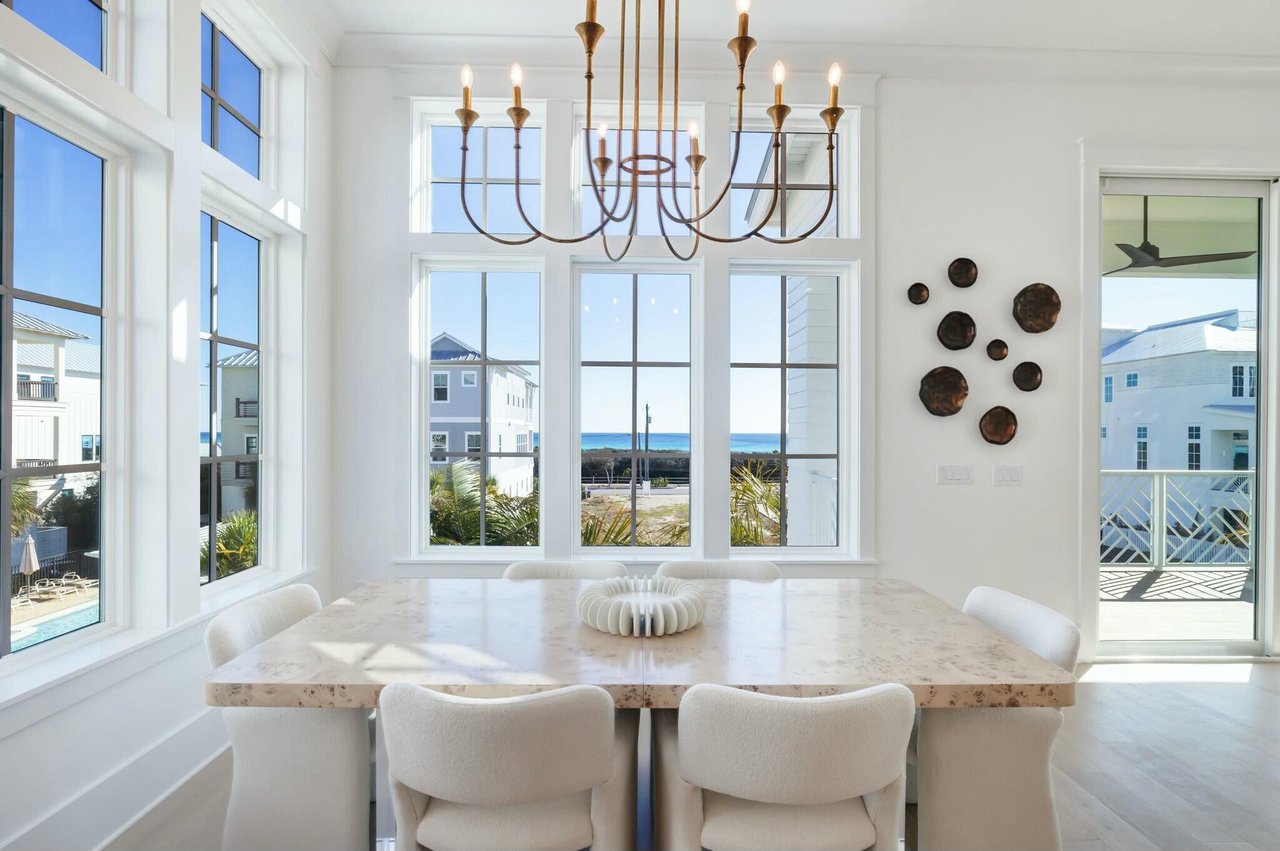
Every listing sheet for a Watersound Beach home has a line for annual property taxes. It is a real number, taken from a real bill. It reflects years of assessment history that belong to the seller, and that history ends at closing.
Florida voters approved Amendment 3 on November 3, 2026, with 61.98% voting yes in the state's first set of unofficial returns. That cleared the 60% threshold a constitutional amendment needs. Most coverage has treated it as a homestead tax cut. For a Watersound Beach home that is no one's Florida homestead, it works through three other channels: a tighter cap, a reset at sale, and a county budget that leans hard on non-homestead owners.
The Number on the Listing Belongs to the Seller
Article VII, Section 4(g) of the Florida Constitution covers residential property of nine units or fewer that is not a homestead. For all levies other than school district levies, its assessment can rise each year only by a capped percentage, and it can never exceed just value, which is market value.
The cap does not travel with the house. The same section, as printed in the state's 2026 constitutional amendment booklet, says that after a change of ownership or control, including a change of ownership of a legal entity that owns the property, the property is assessed at just value as of the next assessment date. The Florida Department of Revenue puts it plainly: newly acquired real property is assessed at just value.
So the tax line on a listing reflects the seller's assessed value. Your first full bill reflects your purchase-era market value. The more years a seller has owned, and the faster values have climbed, the wider the gap between the two.
A Lower Cap Makes That Gap Grow Faster
Amendment 3 cuts the yearly cap on non-homestead assessment increases from 10% to 5%, starting January 1, 2027. Florida TaxWatch confirms that second homes, vacation properties and rental homes are among the properties that get the lower cap. They do not get the larger homestead exemption.
For current owners, that is real relief. It also changes what their bills say to the next buyer. Take a hypothetical home whose market value rises 8% in a year. Under a 10% cap, the assessment can keep up. Under a 5% cap, the assessment falls about three points behind, and the shortfall compounds every year the market outpaces the cap. The amended text keeps the reset in place. It phases in the 5% cap beginning January 1, 2027, and still sends the property to just value after a change of ownership. Each year the market runs ahead of 5%, the seller's bill slides a little further from what a new owner will pay.
Not all of the bill moves with the cap. Here is how the pieces line up for FY 2026–27:
| Part of the bill | Covered by the non-homestead cap? | FY 2026–27 rate |
|---|---|---|
| Walton County School District levies | No; school levies are excluded | 4.122 mills total |
| Walton County aggregate operating levy | Yes | 3.2806 mills |
The school levy is calculated on a value with no cap at all, so that part of a seller's bill already tracks market value. The county portion is where the gap opens.
Who Carries Walton County's General Fund
The cap is half the story. The other half is the budget those levies pay for.
At a March 10, 2026 property tax workshop, Walton County's budget staff walked commissioners through the makeup of the General Fund. Non-homestead property tax made up 66% of General Fund revenue. Homestead property tax made up 16%. That workshop dealt with an earlier, broader proposal, but the revenue mix it described is the county's mix whichever measure is on the table.
Amendment 3 shrinks the smaller slice. It raises the homestead exemption on all non-school taxes to $150,000 in 2027 and $250,000 in 2028, with inflation adjustments after that. Several projections put a number on Walton's lost revenue:
- WJHG, after the vote: Walton County leaders predict a loss of $4 million to $8 million, in a November 5 report.
- WMBB, in June: a projected loss of $7 million to $9 million the following year, reported before the vote.
- The state's Revenue Estimating Conference model, in a Florida TaxWatch table: $14.0 million for Walton local governments in FY 2027–28 and $171.1 million over five years.
All of these are estimates. None of them is a realized loss yet. They all point the same way, though. A county whose General Fund already draws two-thirds of its revenue from non-homestead property is losing part of the remaining homestead share.
What the County Has Said So Far
Walton starts from a strong position. On September 28, 2026, commissioners adopted an FY 2026–27 aggregate operating millage of 3.2806 mills, which the adopting resolution says is 5.28% below the rolled-back rate of 3.4634 mills. Under Florida's Truth in Millage law, the rolled-back rate is the rate that would raise the same revenue as the prior year, and anything above it counts as a tax increase. In its pre-election guide, Florida TaxWatch wrote that on average only five of Florida's 67 counties had adopted the rolled-back rate or lower over the previous five years.
After the vote, Commissioner Dan Curry told WJHG that the change "forces our hand to do what we should have done years ago." He pointed to the county's vehicles as a first place to cut. WJHG also reported that commissioners plan budget town halls for citizen input, and that budget planning starts next summer with public safety as a priority.
In June, Commissioner Danny Glidewell told WMBB that he would rather hear what people want. According to that report, he said the county would not raise the sales tax, called a bed-tax increase impractical, and did not rule out raising the millage rate on non-homestead properties. That was a pre-election comment, not a decision. It still shows which lever is available.
Florida TaxWatch made the broader point before the vote. It wrote that exemptions and caps benefiting only some properties work less like tax cuts than tax shifts, and that nothing in Amendment 3 stops local governments from raising millage, fees or assessments. It added that the lower non-homestead cap "may help to slightly mitigate the tax shift."
Taken together, the outlook for a Watersound Beach buyer goes like this. The assessment resets to market value at purchase. The 5% cap then limits how fast the county portion of that assessment grows. The millage applied to it will be set in budget cycles where non-homestead owners carry most of the general fund.
The Dates on This Calendar
- December 31, 2026. People who are not Florida residents on this date get the existing homestead exemption when they first qualify. The larger exemption begins in their fifth year of exemption, "to the extent permitted by the U.S. Constitution." Florida TaxWatch noted that the Florida Supreme Court struck down a similar five-year waiting period in 1982.
- January 1, 2027. Amendment 3 takes effect, along with the 5% non-homestead cap. January 1 is also the date Walton's Property Appraiser assesses value each year.
- Summer 2027. Walton County budget planning begins. Commissioners also plan budget town halls to hear from citizens before they decide where to cut.
- 2028. The homestead exemption on non-school taxes rises to $250,000.
To see a closer figure for a specific home, the Walton County Property Appraiser links to a Beacon tax estimator. It asks for the tax district, just value and exemptions. It also warns that results are estimates only and that special assessments may be added to the bill.
This post is general information, not legal, tax or financial advice. Tax treatment depends on your own circumstances, so please confirm your situation with a qualified tax professional or the Walton County Property Appraiser.
Quick Answers
Does Amendment 3 lower the tax bill on a second home I already own? It lowers the cap on yearly increases in the non-school assessment from 10% to 5%, starting January 1, 2027. The millage rates applied to that assessment are still set each year by local taxing authorities.
Will my assessment start at the seller's level? Under Article VII, Section 4(g) of the Florida Constitution, a change of ownership or control sends the assessment to just value as of the next assessment date.
Does the cap affect school taxes? No. The non-homestead cap applies to levies other than school district levies. For FY 2026–27, Walton's school millage totals 4.122 mills.
If you are weighing a Watersound Beach second home this winter, Lynne Andrews Luxury Collective can help you look past the seller's tax line. We will walk through the property's assessment history with you and put together the questions to take to your tax advisor before you write an offer. Schedule a Personalized Consultation.